Showing posts with label Euthanasia. Show all posts

Tuesday, May 1, 2012

From wanting to die to wanting to live


This moving program from BBC World Service Heart and Soul recounts how Alison Davis who says she suffered at a level beyond 10 on a scale of 1 to 10 and tried several times to end her life. She acquired the will to live after seeing the poor in India. After checking out the Quran and Hindu scriptures, in which she found nuggets of truth, she embraced the Catholic faith, the last thing she wanted to do. Hear her moving conversion account, including her visit to Lourdes. And a moving meditation on the Crucifix.

Wednesday, December 8, 2010

LifeSiteNews needs your help

This excellent news service needs donations urgently.

They write:
The battle for our nations, our culture, and for our souls and the souls of our family and friends, is being fought in the media.

News agencies like ours are the strongest and most effective response to the crisis in our media – to the callous disregard for life, to the assaults on the natural family, to the depravity, sensationalism, dishonesty, nihilism, and disdain for even the most basic standards of decency that increasingly fills our airwaves and our newspapers, and consequently, our minds.

We are the resistance  - on your behalf and together with you.
I know that our entire staff shares this conviction with me. I wish that each and every one of you could meet and talk with them. They are a very special group of people.

No one who works for LifeSiteNews does so for financial gain or for personal glory, for no such thing is to be found in this work. They are involved in this work for one reason only – they believe in our mission. They are, without exception, God-fearing, humble, hard-working servants. They are doing this work for you, for your children and grandchildren, and for our culture.

And so we ask you to consider supporting LifeSiteNews.com during this Christmas campaign with whatever you are able to spare, even if it is only $5.
(Click here to donate)

Monday, October 25, 2010

Michigan Bishops issue guidance for the upcoming elections

Anyone in the US cannot but know it's election time. The mysteries of the US electoral systems are still somewhat hidden from me, but Catholics must seriously weigh their choices this coming November 2nd. The Michigan Catholic Conference has issued the following statement offering guidance to Catholics (emphases in the original except where stated otherwise).
A Call to Conscience:
Faithful Citizenship and the Common Good

Government is instituted for the common good; for the protection, safety, prosperity, and happiness of the people; and not for profi t, honor, or private interest of any one man, family, or class of men” wrote John Adams in Thoughts on Government in 1776. Later that year, the Declaration of Independence announced to the world “that all men are created equal, that they are endowed by their Creator with certain unalienable rights.” The nation’s Founding Fathers created a government where all who reside in these United States are free to pursue the common good—they are free to speak, free to assemble peacefully, and free to worship God and practice their faith.

With these freedoms comes responsibility. Catholics are called to evaluate all matters, including politics, through the lens of faith, to participate in the public square, to engage the political process, and to allow Gospel values to transform our society into a more just and better world for all. In other words, Catholics are called to be “Faithful Citizens.”

Practicing Faithful Citizenship flows from a well-formed conscience. What do we mean when we refer to “conscience?” According to the Catechism of the Catholic Church, paragraph 1777, “Moral conscience, present at the heart of the person, enjoins him at the appropriate moment to do good and to avoid evil. It also judges particular choices, approving those that are good and denouncing those that are evil. [Emphasis added.] It bears witness to the authority of truth in reference to the supreme Good to which the human person is drawn, and it welcomes the commandments. When he listens to his conscience, the prudent man can hear God speaking.”


When we act in harmony with our conscience, shunning evil for that which is good, we are bringing Gospel values to the public square. Our pluralistic nation has a rich history of welcoming various ideas and proposals from all sectors of society, including, and especially, religious groups. In this tradition, the teachings of our Lord Jesus Christ, brought to the public square by faith-fi lled Catholics, help to embolden our communities and to advance the common good.

Those primarily responsible for implementing the common good are the public offi cials whom we elect at the ballot box every two and four years. Public officials hold tremendous influence over public policies that affect us not only as citizens of this great state, but more importantly, as Catholics and people of faith. Issues of religious freedom, the right to life, protection of marriage and the family, the education of children, and how the poor, the vulnerable and immigrants are served confront elected offi cials at the State Capitol each day. These are the issues that we, too, as Catholics, must seriously evaluate when deciding for whom to vote this November. [Emphasis added.]

We recognize that Catholics seek guidance from their church on matters of conscience. As teachers of thefaith, we do not endorse candidates or political parties. However, as bishops of the church, we have a duty to help the Catholic faithful form their consciences based on Gospel values and the teachings of Jesus Christ. As Catholics, we must evaluate candidates’ positions based on the principles of Catholic Social Teaching in order to determine who best will guide our communities.

Yet not all issues carry equal moral weight. Catholics may disagree on practical policies that call for prudential judgment, such as how best to care for the poor, how to welcome the immigrant, or how to eradicate racism. There are other policies, however, that are intrinsically evil and can never be supported. [Emphases added.]

The right to life is a commandment of God, an inherent and a fundamental moral principle. It is indeed the first of the unalienable God-given rights recognized by our Founding Fathers in the Declaration of Independence. It is the primary right through which all other rights flow. The willful destruction of human life through abortion, human embryo experimentation, and assisted suicide represent intrinsically evil policies. A Catholic with a well-formed conscience would be guilty of formal cooperation in evil if they were to deliberately vote for a candidate precisely because of the candidate’s permissive stance on these policies. On the difficult occasion where both candidates support an intrinsic evil, the conscientious voter may consider each candidates’ integrity and commitments, and determine which would be less likely to advance such a morally flawed position and more likely to promote other authentic human goods. [Emphases added.]

By forming our consciences based on Gospel values and the teachings of Jesus Christ, we can bring to the public square our commitment to the common good. Elected officials in Lansing expect nothing less from us. As Catholics, we are urged to vote, to take part in conversations about political matters, to join political parties, and to use the Internet to learn more about candidates and their positions. Most importantly, all of us, as faithful citizens, are called to cast our vote through the lens of faith.

Let us pray to the Holy Spirit for wisdom and guidance as we prepare to elect our political leaders this year.

Most Reverend Allen H. Vigneron
Archbishop of Detroit
Most Reverend Bernard A. Hebda
Bishop of Gaylord
Most Reverend Walter A. Hurley
Bishop of Grand Rapids
Most Reverend Paul J. Bradley
Bishop of Kalamazoo
Most Reverend Earl A. Boyea
Bishop of Lansing
Most Reverend Alexander K. Sample
Bishop of Marquette
Most Reverend Joseph R. Cistone
Bishop of Saginaw

I should think this statement makes it pretty clear that if you have a choice between a candidate is will vote in favour of abortion and one who will vote to prevent abortion the moral imperative is to elect the one who will vote pro-life.

The Michigan Catholic Conference has also published an Election and Political Activities Guide and a statement on a proposal concerning the Constitution of the State of Michigan (the politics of which is beyond me).

Should incitement to infanticide be a crime?


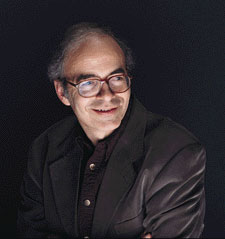
Catholic Family and Human Rights Institute (C-FAM) refer to a debate at Princeton University between a couple of 'heavyweight philosophers', namely Peter “An infant has no moral status because he is not self-aware” Singer,


a professor of bioethics, and John Finnis, a professor emeritus of philosophy in the University of Oxford, who argued against using the 'F' word: foetus:

As used in the conference program and website, which are not medical contexts, it is offensive, dehumanizing, prejudicial, manipulative, A website describing ultrasound for expectant mothers doesn’t talk about her fetus but her baby, and so do her doctors unless they’re her abortionists or think she has been or is interested in abortion.

How's this for a statement from Frances Kissling, a so-called bioethics scholar and abortion rights advocate and conference organiser:

We have to get rid of the idea of evil.

Pretty Marxist, don't you think?

As C-FAM reports:
Singer defended his support for infanticide, stating that self-awareness confers moral status, and not species membership. Abortion is the killing of a human being, but is not immoral because the child does not meet the self-awareness test, said Singer.

In his utilitarian view, Singer believes that there can even be a moral duty to kill humans lacking self-awareness, including the disabled, which he has been criticized for not following in the case of his mother.
Interesting that the Princeton University debate website states that these debates are inspired by the call made by President Obama in his speech at Notre Dame University

for those on different sides of the abortion issue not only to work together where we agree, but also to engage in "vigorous debate" with "open hearts, open minds, and fair minded words."
Meanwhile said President vigorously promotes legislation and health care programmes that increase the provision of abortion. To debate with infanticiders with open heart, open mind and fair minded words is to tell them the truth: they are killers. Say it nicely, but clearly. Apparently Finnis kept his cool in the debate.

In looking for an image of Singer I found one at SuperVegan. Now I haven't much in common with vegans but take a look at the website which refers to Singer's obnoxious "ethical" views:

Earlier this week, animal rights advocate and ethicist Peter Singer restated his position on killing disabled babies for the UK Independent "You Ask the Questions" column. In response to a reader's question "Would you kill a disabled baby?," Singer replied:

"Yes, if that was in the best interests of the baby and of the family as a whole. Many people find this shocking, yet they support a woman's right to have an abortion. One point on which I agree with opponents of abortion is that, from the point of view of ethics rather than the law, there is no sharp distinction between the fetus and the newborn baby."

This isn't really news since for some time now Singer has been promoting euthanasia of the disabled. But I thought I'd share this just in case some people didn't know about Peter Singer's unflinching ethics.

Now Vegans or even Super Vegans are people with whom I'd be very happy to debate with open mind, open heart and fair minded words.

Friday, May 7, 2010

Could our new Parliament be more pro-life than the previous one?

Several anti-life MP's have lost their seats and been replaced by more pro-life ones. John Smeaton of SPUC analyses the gains and losses.

Saturday, January 23, 2010

Amanda Platell speaks sense on life


Not someone I'm terribly familiar with but she spoke sense last night on Any Questions (23minutes 26 seconds into the programme) on the sanctity of life in the case of the mother Frances Ignlis who was convicted of murder for killing her severely incapacitated son.

I've found this good column in the Daily Mail: "Twix bars, condoms and the betrayal of our young people."

Monday, October 19, 2009

Sir Ludovic Kennedy RIP

Sir Ludovic's death is widely reported today. Whilst wishing to be sympathetic and to assure anyone concerned of my prayers for the eternal repose of his soul, I was a little troubled at the reports of his campaigning for the legalisation of euthanasia. (He was president of the Voluntary Euthanasia Society.) So I'm glad to have read John Smeaton's post today.

Saturday, September 19, 2009

Vera’s story must be a warning to us all


This is the title of a feature article in this week's Catholic Herald. The writer, Felicity Smart, relates how she and her husband were left very concerned at the application of the Liverpool Care Pathway to their elderly friend.

She writes:
I ask about intravenous hydration and almost hope to be told that there would be no benefit, because then withholding it would be justified and I could stop asking questions. But the nurse says that in a case such as this, hydration is only given if the relatives request it because it just prolongs a life that would otherwise end sooner rather than later. So Vera could benefit from it.
"It just prolongs life!" So denying it shortens life!

Dehydration also causes distress, so:
A tube is inserted in her arm, which must be for pain relief - not only for the inflammation, but probably to allay the pain of dehydration. Pain relief is also a sedative. Dehydration, and the additional painkillers for it, could shorten her life.

During the course of discussions, Felicity Smart was told that her elderly friend, who was conscious at the time of admission, was informed by a doctor that
no further treatment (my emphasis) was possible, surgery being too risky for someone so frail.

Quite rightly, Felicity asks
if Vera know that "treatment" now includes nutrition and hydration. Did she really want to be dehydrated to death?

To which there was no answer.

The conversation with the palliative care specialist is also worrying:
She tries to tell me that very ill people don't want fluids anyway, so withholding them is not unkind. But did Vera know that dehydration is painful? Ah, but pain relief can make her "comfortable" (a word used several times as a euphemism for this kind of death).

This patient was treated according to the Liverpool Care Pathway, described as "the gold standard of care for the dying" and which "is being rolled out across the NHS.

Now I understand that care in these situations is an immensely complicated matter. If the patient's body is rejecting or not processing food and hydration, I daresay its administration can be ceased. But if the patient can use liquid, its administration is no more extraordinary than the pain relieving substances that are administered intraveniously.

I think we all need to ensure that we are registered with the Patients First Network that advised Felicity about the questions to raise with the medical professional.

LinkWithin

Related Posts Plugin for WordPress, Blogger...